Hi everyone!
Over the past few days, I've pushed forward both XLSX compatibility and a few new features. Here is a summary of what has been merged into the repository:
XLSX Compatibility
- Legacy array formulas (
<f t="array">) and shared formulas (<f t="shared">): No longer imported as static values. They now remain active formulas (with correct relative reference shifting).
- Named ranges: Persisted in the native ASCD/ASCB format with full round-trip support for XLSX (
<definedNames>).
- Cell comments / notes
- Hyperlinks
- Data validation (literal lists and numeric ranges)
- Freeze panes (round-trip)
- Border colors (actual RGB import from XLSX, instead of just "present/absent")
- Print settings: Margins, scaling, and print area in both directions (import + export)
Other Updates
- RATE function (financial, solved via the secant method, similar to IRR).
- Color scales in conditional formatting:
- New rule type
- Editor inside the conditional formatting dialog
- Persistence in the native ASCD format
- XLSX import (
<colorScale> / <cfvo>)
- Evaluation and rendering
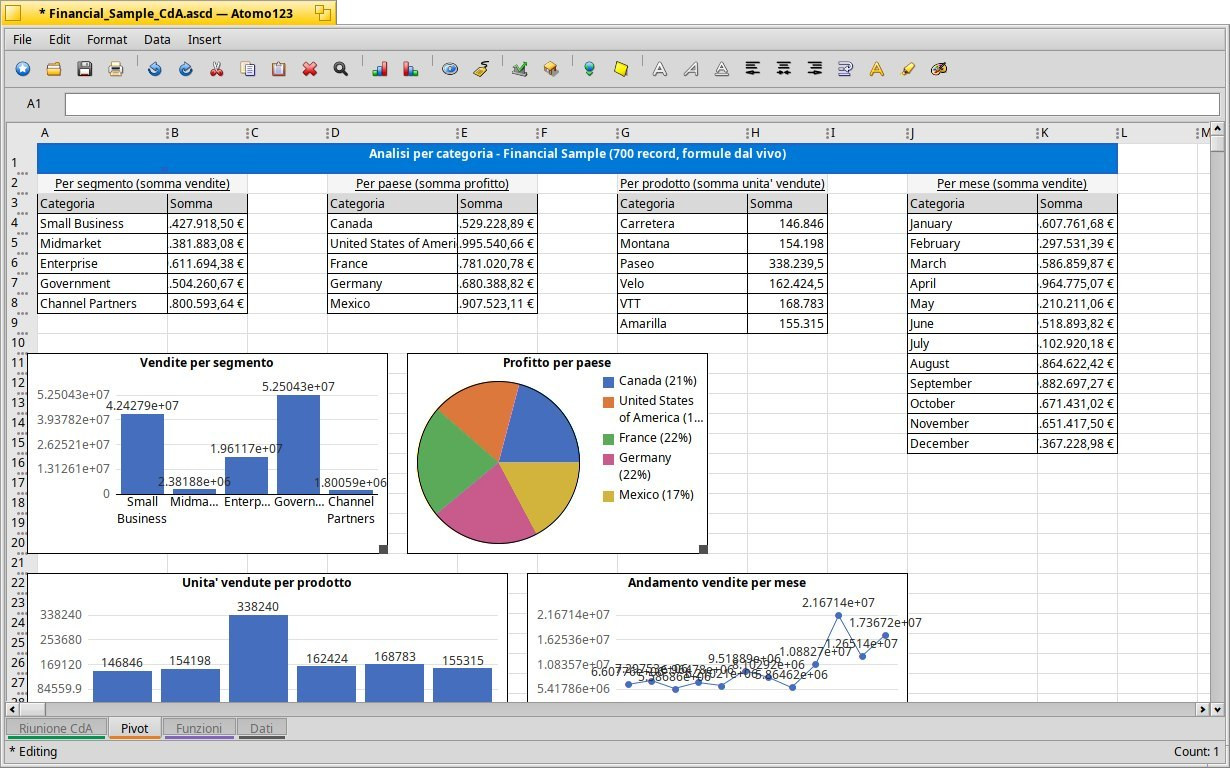
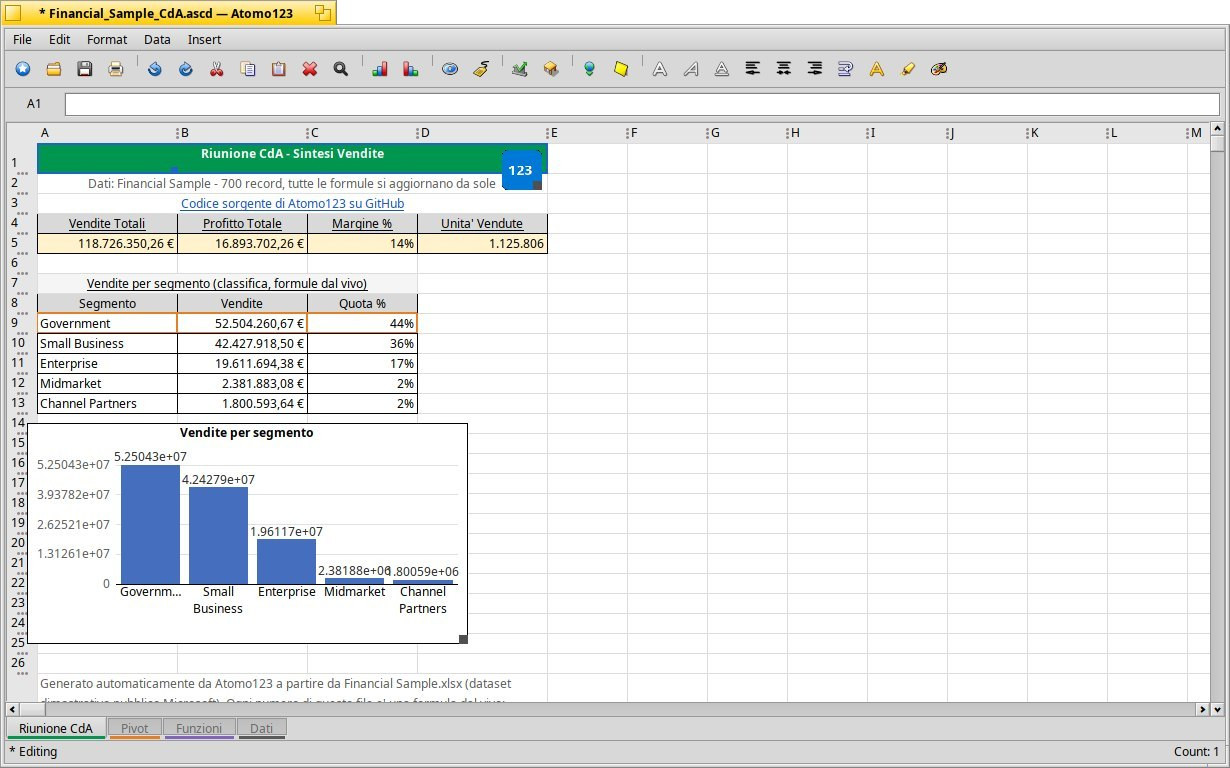
- Updated the "CdA" sample file to showcase it
Next Steps
Work continues on standard XLSX compatibility (additional conditional formatting types, legacy indexed color palettes, Excel pivot table round-trips, etc.).
Repo: https://github.com/atomozero/Atomo123
As always, feedback and bug reports are welcome!